IQ for Mensa: The Ultimate Guide to Admission Requirements (2026)
If you have ever wondered what it takes to join the oldest and most prestigious high-IQ society in the world, you are not alone. Determining the exact IQ for Mensa is one of the most common questions asked by those interested in cognitive testing. However, the answer is not just a single, universal number. Because different intelligence tests use different standard deviations, the specific score you need depends entirely on which test you take.
In this comprehensive guide, we will break down the exact IQ for Mensa across all major psychological tests, explain the statistical realities of the 98th percentile, and guide you through the application and testing process. Whether you are planning to sit for an official exam or simply curious about where you stand on the bell curve, this article provides the factual, grounded information you need.
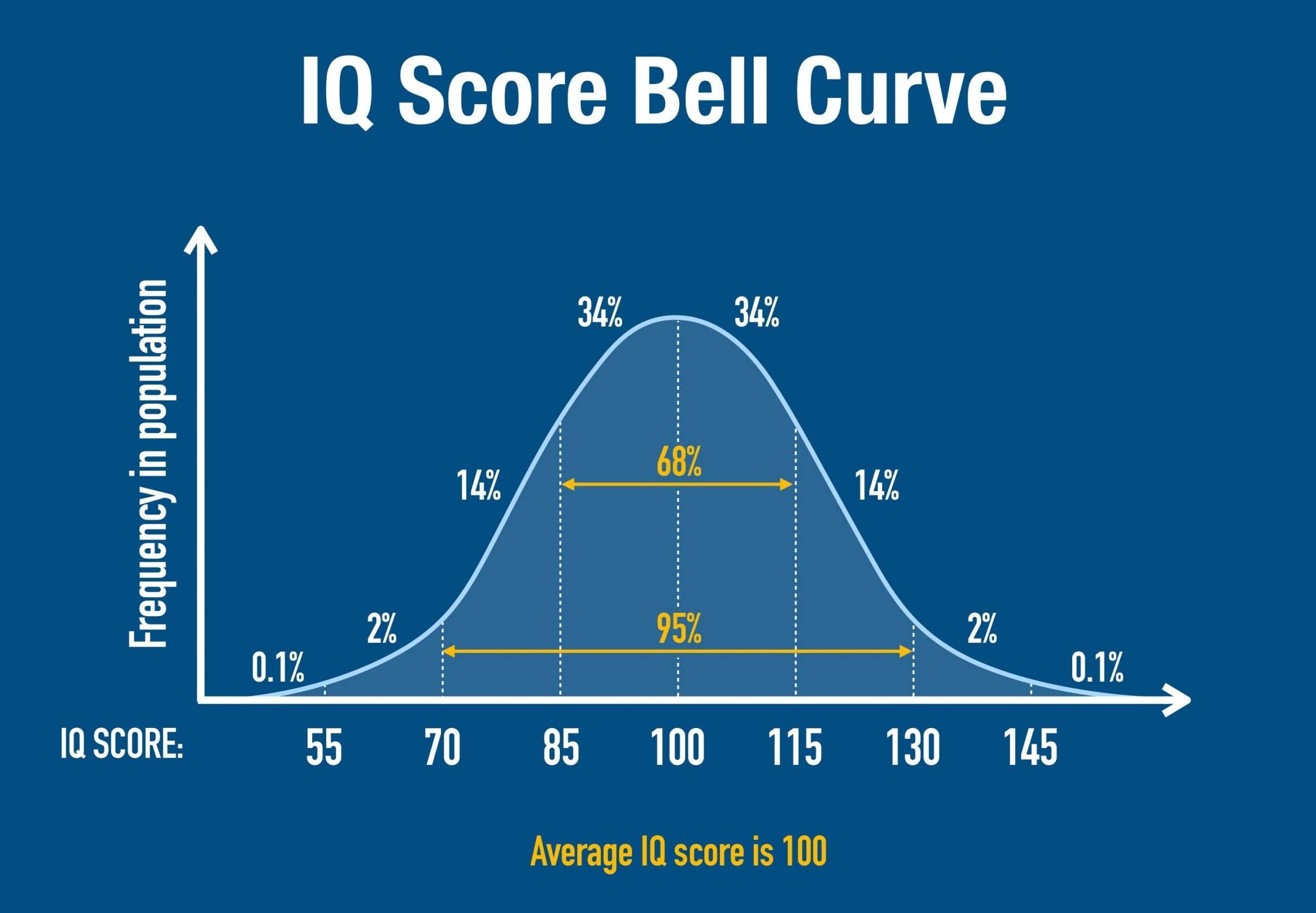
The Core Rule: The defining requirement to join Mensa is scoring in the top 2% of the general population on an approved, standardized intelligence test. There are no exceptions to this statistical threshold.
Understanding the Required IQ for Mensa
Intelligence Quotient (IQ) is a comparative metric. It does not measure absolute brainpower like a scale measures weight; rather, it measures how your cognitive processing speed, spatial reasoning, and logic compare to a massive sample of your peers. To achieve the required IQ for Mensa, you must outperform 98 out of 100 randomly selected people.
The confusion regarding the "Mensa IQ number" stems from standard deviation (SD). Different test publishers scale their scores differently. Therefore, the numerical score required to hit the 98th percentile shifts depending on the specific exam's parameters.
The 98th Percentile Across Different Scales
To make this as clear as possible, here is the exact IQ for Mensa required on the world's most widely recognized and accepted standardized cognitive tests:
Intelligence Test Name
Standard Deviation (SD)
Required IQ for Mensa (Top 2%)
Wechsler Adult Intelligence Scale (WAIS)
SD 15
130
Stanford-Binet Intelligence Scales
SD 16
132
Cattell Culture Fair III
SD 24
148
Woodcock-Johnson Test of Cognitive Abilities
SD 15
130
As the table illustrates, an IQ of 130 on the Wechsler scale is statistically identical to an IQ of 148 on the Cattell scale. Both scores place the test-taker in the 98th percentile. If someone claims to have an IQ of 150, it is crucial to ask them which test they took. If they took the Cattell, they qualify for Mensa. If they took the Wechsler, they are profoundly gifted (1 in 2,330 rarity).
Accepted Tests vs. Invalid Tests
It is important to ground your expectations in reality: no free, online IQ test will ever be accepted by Mensa. The internet is flooded with 20-minute quizzes that artificially inflate scores to make users feel good and encourage social media sharing. These are scientifically invalid for clinical or admissions purposes.
To prove you have the requisite IQ for Mensa, you have two primary pathways:
1. Submit Prior Evidence
If you have previously taken a proctored, standardized test administered by a licensed psychologist, school district, or military branch, you may not need to test again. Mensa accepts prior evidence from over 200 distinct standardized tests. Common examples include:
Cognitive assessments from private psychological evaluations (WAIS, WISC for minors).
Certain older versions of the SAT, GRE, or LSAT (Note: Modern versions of these exams are no longer accepted as they have shifted to measure achievement over fluid intelligence).
Military entrance cognitive exams, provided they yield a verifiable IQ proxy.
2. Take the Official Mensa Admission Test
If you do not have prior evidence, you can sit for the official Mensa test. These sessions are held regularly by local Mensa chapters and are strictly proctored. The testing session usually involves two distinct exams, and scoring in the 98th percentile on either of them qualifies you for membership. It is an affordable and definitive way to discover if you possess the IQ for Mensa.
Can You Study to Improve Your IQ for Mensa?
This is a common and highly debated question. The straightforward answer is: No, you cannot significantly increase your underlying fluid intelligence (g-factor) just to pass a Mensa test.
IQ tests are specifically engineered to measure fluid intelligence—your brain's raw capacity to process novel information, recognize abstract patterns, and solve complex logic problems you have never encountered before. They are not tests of crystallized intelligence, which represents memorized facts, vocabulary, or historical dates.
However, while you cannot change your hardware, you can optimize your software. You can ensure that you test at the absolute ceiling of your natural potential by:
Familiarizing yourself with test formats: Understanding how matrices, numerical sequences, and spatial rotation questions work can reduce test anxiety and save you valuable time.
Practicing logic puzzles: Engaging with Sudoku, nonograms, or Raven's Progressive Matrices proxy tests can help your brain get used to the "style" of thinking required.
Physical optimization: Sleep deprivation, poor nutrition, and stress can temporarily lower an IQ score by up to a full standard deviation (10-15 points). Arriving at the test well-rested is the most effective "study" tactic available.
What Happens After You Achieve the Required IQ for Mensa?
If you receive the letter confirming you have scored in the top 2% and meet the IQ for Mensa, what comes next? Joining the society is an invitation to a unique subculture. Members pay annual dues, which grant access to several distinct benefits.
Intellectual Community and SIGs
Mensa is primarily a social organization. The most significant benefit is the ability to connect with individuals who process information at a similar speed and depth. Mensa operates hundreds of Special Interest Groups (SIGs) ranging from astrophysics and cryptography to scuba diving and board gaming. It provides an environment where intense intellectual curiosity is the norm rather than the exception.
Publications and Annual Gatherings
Members receive national and international publications featuring essays, puzzles, and research written by other members. Furthermore, the Annual Gathering (AG) is a massive convention featuring guest speakers, workshops, and round-the-clock social events tailored to high-IQ individuals.
Addressing the Stigma: Is IQ Everything?
While achieving the required IQ for Mensa is a notable cognitive milestone, it is vital to keep intelligence in perspective. An IQ score is a measurement of a very specific set of cognitive processing abilities. It does not measure:
Emotional Intelligence (EQ): The ability to read, understand, and empathize with others.
Creativity: The capacity to produce highly original art, music, or literature.
Conscientiousness and Grit: The work ethic and determination required to succeed in business or academia.
Moral Character: Integrity, honesty, and kindness.
Many individuals in the 98th percentile live entirely average lives, while many highly successful CEOs, artists, and leaders do not possess the IQ for Mensa. Joining the society should be viewed as an opportunity for personal enrichment and social connection, not as an ultimate validation of human worth.
Frequently Asked Questions (FAQ)
What is the exact IQ for Mensa?
The exact numerical score depends on the test scale. You need a 130 on a test with a Standard Deviation of 15 (like the WAIS), or a 132 on a test with an SD of 16 (like the Stanford-Binet). Both equal the 98th percentile.
Do online IQ tests count for Mensa admission?
No. Mensa strictly requires proctored, scientifically validated exams administered in a controlled environment. Free online tests are for entertainment purposes only.
How much does it cost to take the Mensa test?
The fee to sit for an official Mensa testing session typically ranges from $40 to $60 USD, depending on your local chapter. If you are submitting prior evidence, the review fee is usually around $40.
Conclusion
Discovering whether you have the IQ for Mensa requires stepping away from internet quizzes and committing to a formal, proctored psychological evaluation. The 98th percentile threshold represents a rare and powerful cognitive processing ability. If you are curious about your potential, reaching out to your local Mensa chapter to schedule a test or submit prior evidence is the only definitive way to know.
Remember that whether you score a 100, a 130, or a 160, human intelligence is multi-faceted. The IQ bell curve is a fascinating tool for understanding cognitive distribution, but it is just one chapter in the broader story of who you are.