140 IQ: Unveiling the "Genius" Mind – Rarity, Meaning, and Potential
An Intelligence Quotient (IQ) of 140 is a number that carries significant weight in the world of psychology and cognitive science. It is often cited as the threshold for "genius" or near-genius level intellect. But what does it actually mean to have a 140 IQ? Is it a guarantee of success, or simply a measure of a specific type of processing speed? In this comprehensive guide, we explore the statistics, the psychology, and the reality of living with a 140 IQ.
Defining the Number: The Statistics of 140
To understand the significance of a score of 140, we must first look at the IQ scale. IQ is calculated based on a normal distribution, commonly known as the "bell curve." The average score is set at 100, with a standard deviation (SD) typically set at 15 points.
On a standard Wechsler scale (SD 15), a score of 140 is nearly three standard deviations above the mean. To put this into perspective:
- Average IQ (85-115): Roughly 68% of the population.
- High Average (115-130): The "bright" population.
- Gifted (130-145): The top 2% to 0.1%.
Statistically, a 140 IQ occurs in approximately 1 out of every 261 people. This makes it rare, but not unique. In a city of 1 million people, you could expect to find roughly 3,800 individuals with an IQ of 140 or higher.
If you want to see exactly where you stand or calculate the rarity of other scores, you can use our IQ Percentile Calculator.
140 vs. The "Genius" Label
Historically, the term "genius" was associated with scores above 140 on the Stanford-Binet scale. However, modern psychology has moved away from using a single number to define genius. True genius usually implies a combination of high intelligence (high IQ) and exceptional creative output or achievement.
While having a high IQ is a prerequisite for certain types of intellectual work, a score of 140 essentially represents potential rather than guaranteed achievement. It indicates a brain that is wired for rapid learning and complex synthesis of information.
Cognitive Capabilities: What Can a 140 IQ Do?
People often ask, "What does a 140 IQ feel like?" While subjective experience varies, cognitive science tells us that individuals at this level process information differently than the average person.

1. Enhanced Pattern Recognition
The hallmark of high intelligence is the ability to spot patterns in chaotic data. A person with a 140 IQ can often see relationships between seemingly unrelated concepts. This is why they often excel in fields like theoretical physics, advanced mathematics, and systems architecture. You can test your own ability in this area with our visual tracking tests or sequence memory tests.
2. Rapid Information Processing
It’s not just about knowing more; it’s about thinking faster. High IQ correlates with speed of processing. When presented with a new complex problem, a 140 IQ mind can simulate multiple outcomes and reach a conclusion significantly faster than someone with an IQ of 100.
3. Abstract Reasoning
Verbal and Nonverbal intelligence at this level allows for deep abstract thought. This involves thinking about concepts that have no physical form—philosophy, higher-level logic, and hypothetical scenarios.
The Mensa Connection and High IQ Societies
One of the most common reasons people search for "140 IQ" is to determine eligibility for high IQ societies. The most famous of these is Mensa.
Mensa requires a score in the top 2% of the population.
- On a standard deviation of 15 (Wechsler), the cutoff is 130.
- On a standard deviation of 16 (Stanford-Binet), the cutoff is 132.
- On a standard deviation of 24 (Cattell), the cutoff is 148.
Therefore, an IQ of 140 (SD 15) is well above the Mensa minimum requirement. If you score 140 on a proctored, standardized test, you would comfortably qualify for membership. There are even more exclusive societies, such as the Triple Nine Society (top 0.1%, IQ 146+), which a 140 scorer would be approaching, though not quite reaching.
Career Paths and Success for the 140 IQ
Does a 140 IQ guarantee you will be a millionaire? Absolutely not. However, it does open doors to careers that have high cognitive barriers to entry.
Common Professions for High IQ Individuals
- Medical Specialists: Complex diagnostics require high retention and pattern matching. Check out the average IQ of a doctor to see how 140 compares.
- Academia and Research: PhD-level research often demands an IQ in the 125+ range.
- Software Engineering & Data Science: The abstract logic required for coding appeals to high-IQ minds.
- Law: High verbal intelligence is crucial for complex legal argumentation.
Interestingly, while income generally correlates with IQ up to a point, the correlation weakens at the very high end. Other factors, such as Emotional Intelligence (EQ) and "grit" (conscientiousness), play massive roles in financial success.
The "Curse" of the Gifted: Challenges of a 140 IQ
It is a misconception that life is on "easy mode" for those with a 140 IQ. High intelligence comes with its own set of unique psychological struggles.
1. Analysis Paralysis
Because they can see every possible outcome and variable, people with high IQs often struggle to make simple decisions. They over-analyze situations that others might just "go with."
2. Social Isolation
Communication can be difficult when there is a significant gap in processing speed between two people. Leta Hollingworth, a pioneer in gifted education, noted that a communication gap becomes problematic when the difference is more than 30 IQ points. A person with 140 IQ trying to communicate with someone of average intelligence (100) faces a 40-point gap, which can lead to frustration and loneliness.
3. High Expectations and Anxiety
From a young age, those identified as "gifted" often feel immense pressure to succeed. This can lead to perfectionism and fear of failure. If you feel this pressure, you might find our stress test or therapy match resources helpful.
Comparing 140 IQ to Famous Figures
We often look to history to benchmark our intelligence. While accurate testing didn't exist for historical figures, psychologists have estimated their scores based on their writings and achievements.
| Figure | Estimated IQ | Field of Genius |
|---|---|---|
| Albert Einstein | 160 | Physics |
| Leonardo da Vinci | 180-220 | Art & Engineering |
| Marilyn Monroe | 168 (Alleged) | Acting |
| Average College Graduate | 115-120 | General |
A 140 IQ puts you in the same conversation as many leading scientists and intellectuals, though perhaps slightly below the "history-altering genius" level of a Da Vinci or Einstein. However, compare this to a 120 IQ or 130 IQ, and the difference in raw processing power becomes noticeable.
Measuring Your IQ: How Do You Know You Are a 140?
You cannot accurately determine a 140 IQ via a 5-minute quiz on social media. Scores this high require sensitive, professionally calibrated instruments.
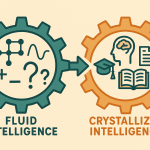
Fluid vs. Crystallized Intelligence
IQ tests generally measure two things:
- Fluid Intelligence (Gf): The ability to solve novel problems, identify patterns, and use logic in new situations. This peaks in early adulthood.
- Crystallized Intelligence (Gc): The ability to use learned knowledge and experience. This tends to increase with age.
To score 140, one typically needs to score exceptionally high in both, or virtually max out the Fluid Intelligence section.
Standardized Tests
The gold standards for testing are:
- Wechsler Adult Intelligence Scale (WAIS-IV)
- Stanford-Binet 5
- Cattell Culture Fair III (Focuses purely on fluid reasoning)
If you are looking for a starting point to estimate your range, you can try our free IQ test or the official IQ test simulation.
Can You Increase Your IQ to 140?
This is one of the most debated topics in psychology. The general consensus is that fluid intelligence is largely genetic and fixed by early adulthood. However, you can maximize your functional intelligence.
Research suggests that while you may not be able to jump from 100 to 140, you can sharpen your cognitive faculties.
- Brain Training: Tools like the N-Back test and N-Back training have shown some promise in improving working memory, a key component of IQ.
- Physical Health: Never underestimate the link between body and mind. See our article on exercise and cognitive benefits.
- Sleep: Adequate rest is essential for neuroplasticity. Read more about IQ and sleep.
Conclusion: The Responsibility of Intelligence
Having a 140 IQ is a gift, but it is merely a tool. It is the engine, not the destination. A high-performance car sitting in a garage achieves less than a reliable sedan that is driven every day.
If you possess this level of intellect, the challenge is to apply it—to solve problems, to create art, to advance science, or simply to understand the world more deeply. Don't get hung up on the number. Whether you are a 125 IQ or a 139 IQ, your contribution to the world is defined by your actions, not your test score.
Ready to challenge your brain right now?