IQ Test 2026
2026 Cognitive Assessment
Prepare to challenge your mind with our most accurate test.
40 Questions
40 Minutes
Scientific Disclaimer: This test is calibrated for educational self-assessment. For a clinical diagnosis, consult a professional psychologist.
2026 Assessment Result
Analysis Complete
2026 Normative Curve
The Science Behind the IQ Test 2026
In the evolving landscape of psychometrics, the IQ Test 2026 represents a calibrated step forward. While many online tests rely on outdated datasets, this assessment is designed to reflect the cognitive norms of the 2026 population. It focuses specifically on fluid intelligence (Gf), a core component of the "g-factor" (general intelligence) that measures your ability to reason, solve novel problems, and identify patterns independent of previous learning or cultural background.
By utilizing items similar to Raven's Progressive Matrices, this test eliminates linguistic and cultural bias, making it a pure measure of cognitive processing power rather than educational attainment. This distinction is crucial for modern assessment standards.
The Two Pillars of Intelligence: Fluid vs. Crystallized
Psychologists generally categorize general intelligence into two distinct types. Understanding the difference is key to interpreting your score on this test.
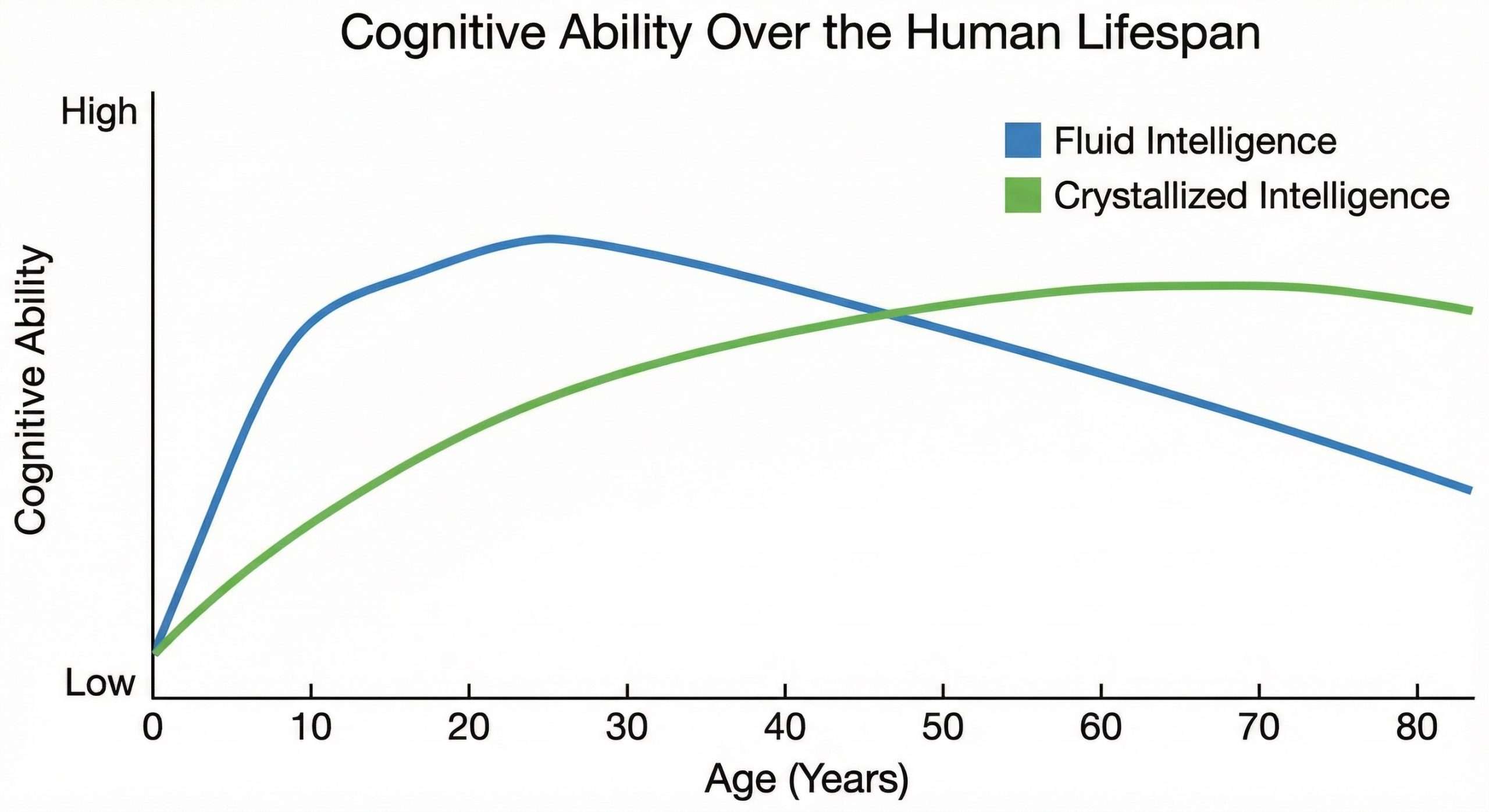
- Fluid Intelligence (Gf): The ability to think abstractly, identify complex patterns, and solve problems that you have never seen before. It is biologically based and tends to peak in the mid-20s. This is what our 2026 test measures.
- Crystallized Intelligence (Gc): The accumulation of knowledge, facts, and vocabulary acquired through education and experience. This tends to remain stable or increase well into old age.
Scientific Accuracy & The 2026 Bell Curve
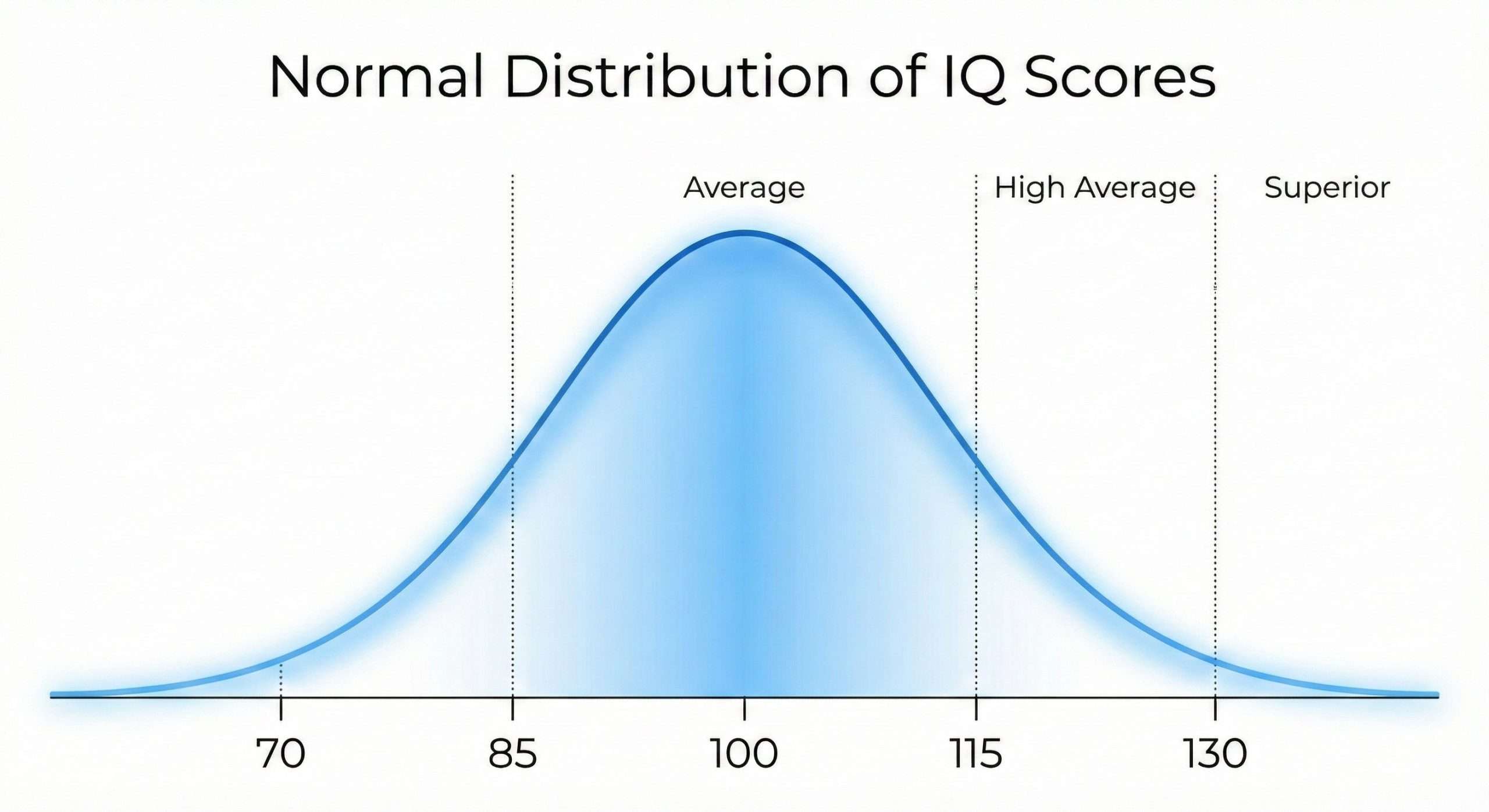
IQ scores are not arbitrary numbers; they are statistical percentiles. This test utilizes a standard deviation (SD) of 15, consistent with the clinical Wechsler Adult Intelligence Scale (WAIS-IV) and Stanford-Binet 5. The average score is set at 100.
Because populations get smarter over time due to better nutrition and education (a phenomenon known as the Flynn Effect), tests must be recalibrated periodically. A score of 120 on a test from 1990 might only be a 110 today. Our 2026 calibration ensures your score is accurate against today's peers.
Detailed Score Interpretation Guide
Receiving your score is only the first step. Understanding what that number implies about your cognitive capacity is where the value lies.
130+ (Very Superior)
Scores in this range represent the top 2.2% of the population. Individuals here often possess exceptional abstract reasoning capabilities and grasp complex systems intuitively. This range is typical for high-level researchers, theoretical scientists, and members of high-IQ societies like Mensa.
120-129 (Superior)
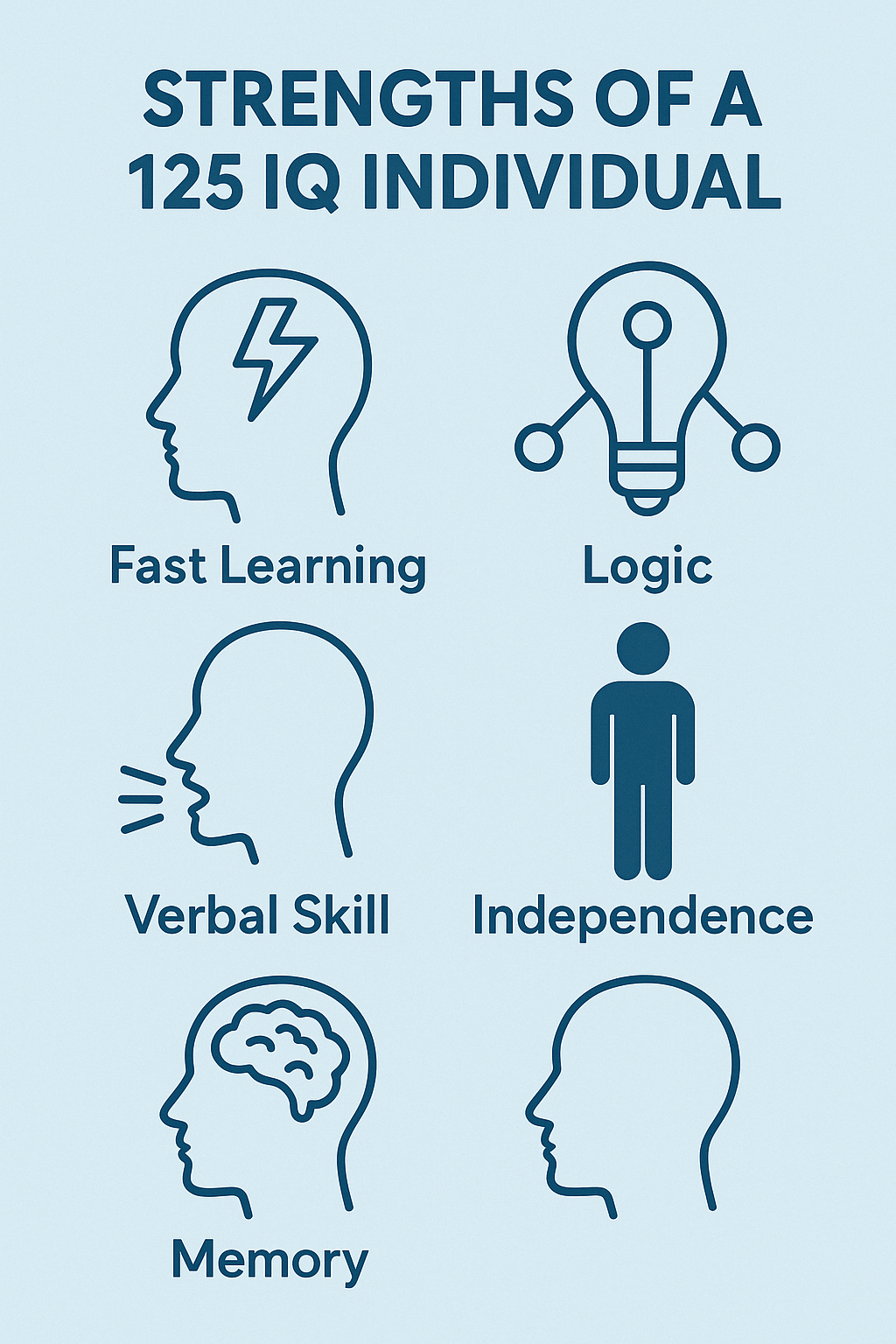
Representing the top 9% of the population, this score indicates strong intellectual potential. People in this range are often quick learners who excel in academic environments and professional roles requiring complex decision-making and analysis.
110-119 (High Average)
This range is above the general population mean. It suggests a solid capacity for learning and problem-solving. Individuals here generally handle university-level education and most professional careers with competence.
90-109 (Average)
This is the statistical norm, encompassing 50% of the human population. It indicates a healthy, functional cognitive ability capable of managing daily life, standard employment, and typical educational requirements.
Neuroscience of Pattern Recognition
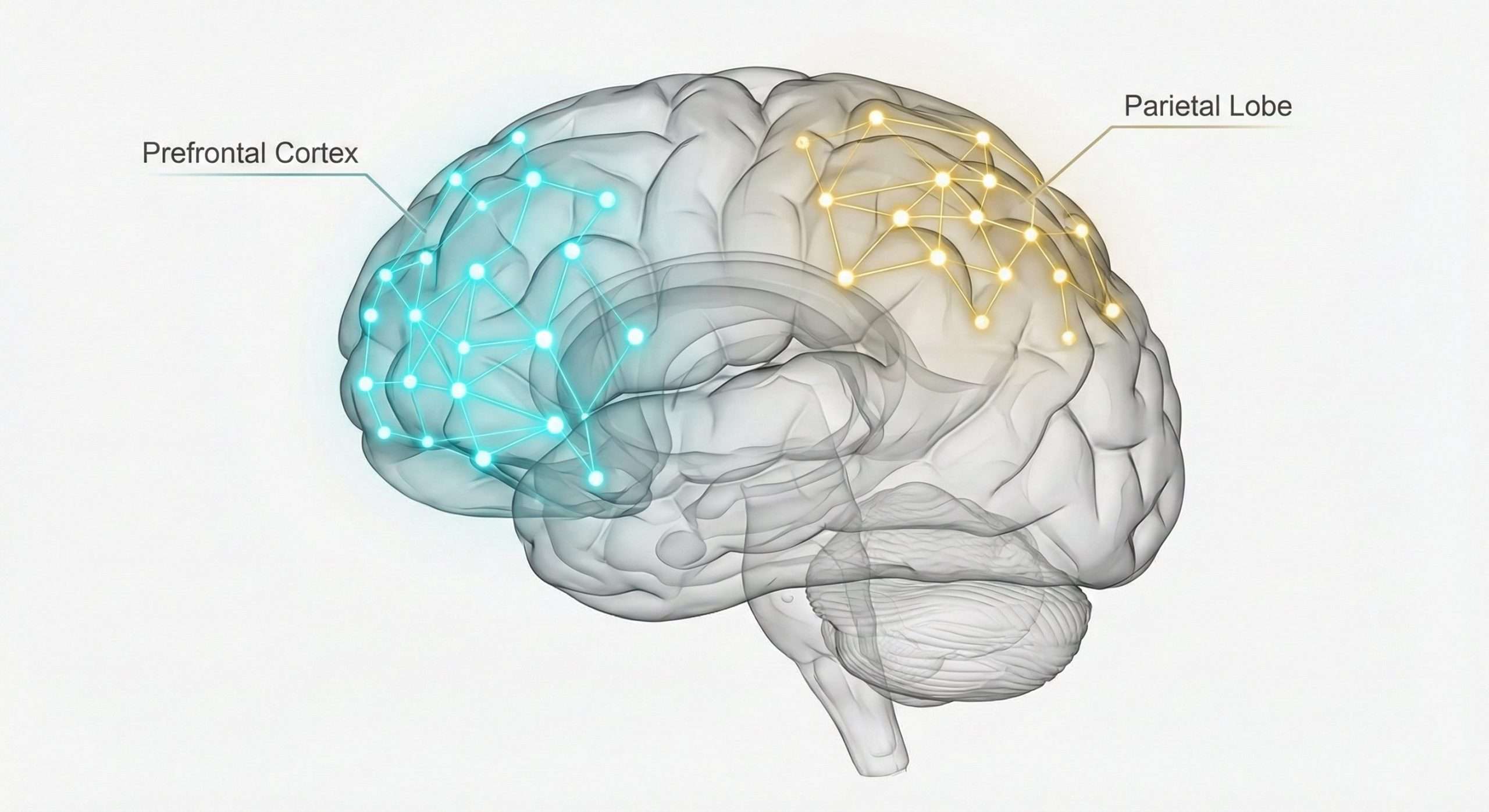
Why do we test with shapes and grids? Neuroscience tells us that pattern recognition is not just a visual task; it is a fundamental function of the neocortex. When you solve a matrix puzzle, you are engaging the prefrontal cortex (responsible for executive function) and the parietal lobe (responsible for integrating sensory information).
High performance on these tasks correlates with neural efficiency—the ability of the brain to solve problems using fewer energy resources.
Can You Increase Your IQ?
A common question is whether fluid intelligence is fixed. While Gf has a strong genetic component (heritability is estimated at 50-80%), recent research into neuroplasticity suggests that the brain can form new connections throughout life.
While you may not be able to drastically jump from an IQ of 100 to 140, you can optimize your cognitive performance. Activities like the Dual N-Back task, learning a new language, or engaging in complex strategic games can improve working memory, which is highly correlated with IQ. Furthermore, factors like sleep hygiene, cardiovascular health, and stress management play a massive role in whether you are performing at your maximum potential on test day.
Frequently Asked Questions
Is the IQ Test 2026 calibrated for all ages?
The 2026 edition is primarily normed for adults and young adults (16+). It uses the latest data to ensure fair comparisons across this demographic. For children below 16, a WISC (Wechsler Intelligence Scale for Children) assessment is recommended.
How accurate is this online assessment?
This test uses updated Raven's Matrices-style items to ensure high internal consistency and a strong correlation with the general intelligence factor (g). While it is one of the most accurate online estimations available for the 2026 calendar year, it should be used for educational purposes. For a medical or legal diagnosis, a proctored in-person exam is required.
Do I need to register to get my 2026 score?
No. We believe in open access to cognitive metrics. You will receive your full 2026 analysis and score placement instantly upon completion, without the need to create an account or pay a fee.
What is the highest possible score on this test?
This test is calibrated to measure up to an IQ of 150 (Standard Deviation 15). Scores beyond this range require specialized high-range tests, as the general population data becomes too sparse to offer statistical validity above 3.5 standard deviations.
Conclusion
Whether you are establishing a baseline for the year, preparing for a rigorous entrance exam, or simply satisfying your curiosity, the IQ Test 2026 offers a robust, scientifically grounded tool for self-discovery. We encourage you to take the results as a snapshot of your current cognitive efficiency and use them as a springboard for further intellectual growth.