In the landscape of human intelligence, different milestones represent vastly different territories. If an IQ of 130 is the gateway to "giftedness," unlocking entry to societies like Mensa, then an IQ of 145 is stepping into an entirely different universe. Individuals in this range are often referred to academically as "profoundly gifted" or "exceptionally gifted." They possess cognitive architectures that differ radically from the norm, not just in degree, but in kind.
A 145 IQ is not simply "smarter" than average in the way a professional athlete is faster than a weekend jogger. It represents a qualitative shift in how the brain absorbs, processes, synthesizes, and extrapolates reality. The jump in cognitive horsepower from 130 to 145 is arguably more impactful on life experience than the jump from 100 to 130.
In this deep dive, we move beyond the basic statistics to understand the rarity, the psychological burden, and the sheer brilliance of living within the top 0.13% of the human population.
The Statistical Definition: "3 Sigma"
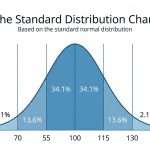
To understand the weight of this score, we must look at statistics. In a normal distribution (the bell curve), "Sigma" (σ) represents a standard deviation. On the most widely used professional intelligence tests, such as the Wechsler scales (WAIS-IV, WISC-V), one standard deviation is set at 15 points.
The mean (average) score is 100.
100 + 15 (1σ) + 15 (2σ) + 15 (3σ) = 145.
A score of 145 is exactly 3 Standard Deviations above the average. In statistical terms, anything beyond 3 Sigma is considered an extreme outlier.
Rarity: How Alone Is the 145 IQ Individual?
Because high intelligence gets so much media attention, many people drastically overestimate how common these scores are. While you might meet someone with a 130 IQ fairly often—roughly 1 in every 50 people—a 145 IQ is exponentially rarer due to the nature of the bell curve. As you move further from the average, the population density drops precipitously.
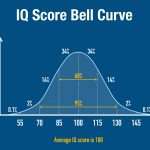
Visualizing the "3 Sigma" Outlier: The higher the score, the thinner the air. A 145 IQ represents the top 0.13% of humanity, standing far above the norm.
Statistically, a 145 score appears in roughly 1 out of every 741 people (approximately the 99.87th percentile). To put that scarcity into perspective:
In a large high school of 2,000 students, there may be only 2 or 3 students operating at this level.
In a typical corporate office of 100 people, you are statistically almost certain to be the only one.
In a packed sports stadium of 50,000 people, there would only be around 67 individuals with this level of cognitive ability.
This profound scarcity is the root of the "alien" feeling reported by many at this level. It is the persistent sense that no matter where they go—school, work, or social gatherings—they are operating on a fundamentally different operating system than the vast majority of those around them. This can lead to a sense of isolation that is difficult to articulate. You can check the specific percentile of any score using our precise IQ Percentile Calculator.
Cognitive Traits of the 145+ Mind
What distinguishes a 145 IQ from a very bright 125 IQ? It is largely a matter of speed, complexity, and the ability to handle abstraction without losing focus.
1. The "Synthesizer" Brain and Pattern Matching
While a smart person learns a subject, a 145 IQ individual synthesizes it. They possess an almost uncanny ability to instinctively connect disparate fields. They might see the same underlying structural patterns in baroque music, computer coding syntax, and biological ecosystems. This ability to map concepts across domains is why many at this level become "Polymaths"—experts in multiple, seemingly unrelated fields. Their brains are constantly seeking the "unifying theory" behind whatever data they are consuming.
2. Asynchronous Development
This trait is particularly pronounced in children and adolescents, but its effects linger into adulthood. Asynchrony is the state of being "out of sync" with oneself. A 10-year-old child with a 145 IQ might have the intellectual capability to understand calculus or complex political theory (like an 18-year-old), yet still possess the emotional regulation and life experience of a 10-year-old. This massive internal mismatch can cause significant friction, leading to frustration, outbursts, or anxiety. It is a core concept in intelligence psychology and gifted education.
3. High-Velocity Information Processing
Perhaps the most noticeable trait in day-to-day life is sheer cognitive speed. The 145 IQ mind absorbs new information, runs simulations, and reaches conclusions at a velocity that can seem baffling to others. In a meeting, while others are still defining the problem, the 145 individual has likely already modeled three potential solutions and identified the flaws in each.
The Speed of Thought: For the profoundly gifted, information processing happens at a velocity that can make standard communication feel agonizingly slow.
4. Existential Depth and Sensitivity
With high intelligence comes the ability to foresee long-term consequences and analyze complex systems to their logical ends. This often leads to what researchers call "existential depression" at a surprisingly young age. The 145 mind asks "Why?" relentlessly. Why do we do things this way? What is the point? They often find the standard, superficial answers provided by society to be woefully insufficient, leading to a deep sense of disillusionment or moral questioning that peers cannot relate to.
145 IQ vs. Mensa vs. The Triple Nine Society
Is 145 enough for Mensa? Yes, easily.
However, for someone at this level, Mensa is often not the peer group they are looking for. Mensa's requirement is the top 2% of the population (approximately 130 IQ on most tests). A person with a 145 IQ is in the top 0.1%.
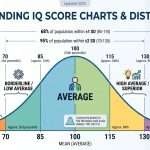
To put it bluntly: The cognitive gap between a 145 IQ individual and a baseline Mensa member (130 IQ) is roughly the same size as the gap between an average person (100 IQ) and a borderline intellectually disabled person (85 IQ). They are in different cognitive weight classes.
The Next Tier: Triple Nine Society
Individuals scoring around 145 are often candidates for more exclusive, high-ceiling societies that cater specifically to the profoundly gifted, such as the Triple Nine Society (TNS). The TNS requires a score at or above the 99.9th percentile.
Triple Nine Cutoff (SD 15): ~146
Triple Nine Cutoff (SD 16): ~149
At 145, you are right on the cusp of this elite tier, and depending on the specific test taken and its standard error of measurement, you may qualify.
The Communication Gap (The "30-Point Rule")
One of the greatest challenges for the profoundly gifted is communication. Leta Hollingworth, a legendary psychologist who pioneered the study of gifted children, proposed a theory that has become known as the "communication range." She suggested that meaningful leadership and effortless communication become difficult when the IQ gap between two people exceeds roughly 30 points (two standard deviations).
Your IQ
Target Audience IQ
Expected Interaction
145
145+
Effortless, rapid-fire communication. High use of abstraction, metaphor, and intuitive leaps. Highly satisfying.
145
115 (High Average)
Effective but requires effort. You can lead and teach them, but you must consciously slow down and simplify concepts.
145
100 (Average)
The Danger Zone. Communication frequently breaks down. Your ideas may be perceived as "too complex," "unrealistic," or you may be viewed as arrogant for trying to explain them.
This principle explains why many people with a very high IQ struggle in standard corporate environments. They often see solutions that seem obvious to them but appear "impossible" or "too risky" to average managers. This leads to a cycle of professional frustration where the gifted individual is correct but ignored, eventually leading them to check out or seek alternative paths.
Tests That Can Actually Measure a 145 IQ
If you suspect you or someone you know is in this range, standard internet tests are useless. Most online quizzes have a "ceiling" around 130 or 135—they simply do not have harder questions necessary to differentiate scores above that level. To accurately measure a 145, you need proctored, clinical tests designed with high ceilings.
Stanford-Binet (SB5): Often considered the gold standard for measuring profound giftedness due to its high ceiling and distinct subtests.
WAIS-IV (Wechsler Adult Intelligence Scale): The most common clinical test, though extremely high scorers sometimes hit the ceiling on specific subtests, potentially underestimating their true ability.
Cattell Culture Fair III: A test that focuses purely on non-verbal, abstract reasoning. It aims to remove language and cultural bias to measure raw fluid intelligence.
[Image of normal distribution bell curve showing iq standard deviations]
Is High IQ Hereditary?
A common question at this level is about genetics. If a parent has a 145 IQ, will their children? The answer is complex. Studies suggest IQ is highly heritable (estimates range from 50% to 80% in adulthood), meaning smart parents tend to have smart kids. However, a statistical phenomenon called "regression to the mean" plays a huge role at the extremes.
Because 145 is such an extreme outlier score, probability dictates that the children of a 145 parent will likely be very bright (perhaps in the 120-135 range), but they are statistically unlikely to be as extreme as their parent. It happens, but it is the exception, not the rule. You can explore the probabilities with our IQ Heritability Calculator.
Conclusion: The Responsibility of Potential
Having a 145 IQ is like owning a Formula 1 race car. It is an incredibly powerful piece of machinery, capable of feats standard cars cannot achieve. But it is also high-maintenance, requires specialized fuel (intellectual stimulation), and is utterly impractical for everyday driving in slow traffic.
Without equal development of emotional intelligence, social skills, and the "grit" to persevere through tedious tasks, high IQ remains just potential. History is full of unfulfilled geniuses. The challenge for the 145 individual is not just to understand the world, but to find a way to effectively interface with it.
Curious About Your Own Processing Power?
Standard tests may not measure the extremes, but you can start benchmarking your cognitive abilities today.