Is High IQ Required for Programming?
A high IQ is not strictly required to learn programming, but it is beneficial for advanced software engineering. While basic coding can be mastered by individuals with an average IQ (85–115), complex systems architecture, machine learning, and algorithm design often correlate with scores in the Superior range (120+). However, problem-solving skills, curiosity, and "grit" are often better predictors of long-term career success than raw intelligence.
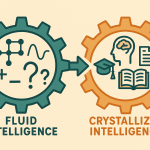
Many aspiring developers suffer from imposter syndrome, wondering if they are "smart enough" to code. The truth is that programming is a skill like any other—it relies more on practice than innate genius. To understand where you stand, it helps to distinguish between fluid intelligence (logic capacity) and crystallized intelligence (learned knowledge).

The 3 Cognitive Skills Used in Coding
IQ tests do not measure "coding ability" directly, but they do measure the underlying cognitive functions that programmers use every day:
- Working Memory: This is the ability to hold multiple variables in your head at once. When you are debugging a complex function, you need to remember what Variable A is doing while looking at Variable B. You can test this specifically with our Number Memory Test.
- Pattern Recognition: Experienced coders don't read every line; they recognize "shapes" and patterns in the code structure.
- Abstract Reasoning: The ability to visualize a system that doesn't exist physically. This is the core of Spatial Intelligence.
⚡ Logic Check: Do You Think Like a Coder?
Programmers need strong "Sequence Logic." Try this simple pattern check used in aptitude screenings:
If A = 2, B = 4, C = 8... What is D?
Did you solve it instantly? You might have high Sequence Memory.
Estimated IQ of Programmers by Role
Not all coding jobs are the same. A "Frontend Web Developer" often requires high creativity and visual design skills, whereas a "Data Scientist" relies heavily on mathematical logic. Below is the estimated average IQ breakdown by technical role:

| Role / Specialization | Est. Average IQ | Primary Skill Needed |
|---|---|---|
| Principal Engineer / Architect | 125 – 135 (Gifted) | System Design & Abstract Logic |
| Data Scientist / AI Researcher | 120 – 130 | Math & Pattern Recognition |
| Backend Developer | 110 – 120 | Logic & Efficiency |
| Frontend Developer | 100 – 115 | Visual Logic & Creativity |
| General Population | 90 – 109 | Various |
💡 Reality Check
Having an IQ of 140 does not guarantee you will be a good programmer. In fact, extremely high IQ individuals sometimes struggle with "simple" coding tasks because they over-engineer solutions. The "Sweet Spot" for a Senior Developer is often considered to be around 115 to 125.
Famous Programmers and Their IQs
People often look to the giants of the industry to see what is required. While official scores are rarely public, estimates based on biography and SAT conversions suggest:
- Bill Gates (Microsoft): Estimated IQ ~160. Known for incredible mental math abilities.
- Mark Zuckerberg (Meta): Estimated IQ ~152.
- Elon Musk (Tesla/SpaceX): Estimated IQ ~155.
However, for every genius like Gates, there are thousands of highly successful, six-figure developers with IQs in the 115 range who succeed through discipline and continuous learning.
Common Questions (FAQ)
Can I code with an IQ of 100?
Absolutely. An IQ of 100 is perfectly average. It means you can learn programming, though it may take you slightly longer to grasp complex algorithms compared to someone with an IQ of 120. We recommend focusing on high-demand skills like Web Development, App Creation, or UI/UX Design rather than low-level systems programming.
Does coding increase your IQ?
Coding is a mentally stimulating activity that deeply engages working memory. While it is debated if you can permanently raise your g-factor (general intelligence), coding definitely keeps your brain sharp and improves fluid reasoning. You can track your cognitive speed using our Reaction Time Tool.
Is Python or C++ better for high IQ?
Language is a tool, not a measure of intelligence. However, lower-level languages like C++ or Rust require managing computer memory manually. This demands higher attention to detail and a larger working memory capacity, which often correlates with higher IQ scores.
Curious about your own potential?
Stop guessing. Establish your cognitive baseline today.
Take the Official IQ Test