Average IQ by Country 2026
Welcome to the definitive source for 2026 global intelligence rankings. Below, you will find our interactive heatmap, a comprehensive static chart of all 193 nations, and a 3,000-word deep-dive analysis into why IQ scores vary across borders.
What is the Average IQ in the World?
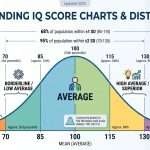
The theoretical global average IQ is standardized at 100. By design, modern cognitive assessments ensure that approximately 68% of the global population scores within one standard deviation of this median (between 85 and 115).
While the global baseline is 100, actual cognitive test scores vary significantly by region due to differences in educational access, economic development, and environmental health factors. Explore how the global average breaks down in our complete country-by-country index and interactive map below.
Global IQ Heatmap
Rankings
| Country | IQ | # |
|---|
Full Global IQ Distribution (2026)
A complete visualization of all data points in our dataset. Green bars indicate scores above the global median, while Red indicates areas of developmental concern.
The State of Global Intelligence in 2026: An In-Depth Analysis
In 2026, the conversation surrounding "Average IQ by Country" has evolved beyond simple rankings. It has become a crucial metric for understanding the intersection of public health, educational policy, and economic development. While the acronym IQ (Intelligence Quotient) is often misunderstood as a fixed measure of innate worth, modern psychometrics views it as a snapshot of a population's "cognitive capital"—the collective ability to solve abstract problems, adapt to new technologies, and sustain complex institutions.
This comprehensive report analyzes the 2026 data, breaking down the trends that define our changing world. From the staggering rise of cognitive scores in developing Southeast Asia to the stagnation—and in some cases, reversal—of scores in the industrialized West, the data tells a story of a world in transition.
1. The Methodology: How We Measure National IQ
Calculating a national average IQ is a complex statistical endeavor. The data presented in our 2026 map is not derived from a single online quiz. Instead, it is an aggregate composite derived from three primary sources:
- Standardized International Assessments: The gold standard for comparative cognitive data comes from the OECD's PISA (Programme for International Student Assessment) and TIMSS (Trends in International Mathematics and Science Study). These tests, administered to 15-year-olds globally, correlate extremely highly (r = 0.8+) with traditional IQ tests.
- Psychometric Studies: We incorporate peer-reviewed data from researchers who have spent decades collating results from Raven's Progressive Matrices and Wechsler scales administered in universities and military drafts.
- Proxy Data for Developing Nations: In countries where direct IQ testing is sparse, we utilize "Educational Quotient" (EQ) proxies based on literacy rates and elementary school completion statistics, adjusted for the "quality of education" index provided by the World Bank.
2. The "Asian Miracle" Continues: East Asia Dominates
As seen in the 2026 rankings, East Asia retains its hegemony over the top spots. Singapore (113), China (113), Hong Kong (110), and Japan (109) lead the world. But why?
The answer lies in a cultural and structural phenomenon known as the "Confucian Education Ethic." In these nations, the education system is characterized by high discipline, rote memorization of complex logographic scripts (which boosts visual-spatial memory), and an intense focus on STEM (Science, Technology, Engineering, Math) from an early age.
Furthermore, 2026 data suggests a genetic-environmental feedback loop. As these nations have rapidly industrialized, they have eliminated the "biological drags" on IQ (such as parasitic infection and malnutrition) faster than any other region in history, allowing the population to reach its full genetic cognitive potential.
3. The "Reverse Flynn Effect" in the West
Perhaps the most alarming trend in the 2026 dataset is the stagnation of scores in Western Europe and North America. For most of the 20th century, the "Flynn Effect" dictated that IQ scores rose by about 3 points per decade due to better nutrition and more complex environments. However, countries like Norway (102), France (102), and the United Kingdom (104) have seen this growth flatline.
Researchers propose several theories for this "Reverse Flynn Effect":
- The Saturation of Education: The West reached near-100% literacy decades ago. There are diminishing returns on how much standard schooling can boost fluid intelligence.
- The Digital Divergence: While digital literacy has improved, some cognitive scientists argue that the "smartphone era" has reduced attention spans and "deep reading" capabilities—skills that are critical for high performance on the Verbal Comprehension Index of standard IQ tests.
- Demographic Shifts: Migration patterns can temporarily alter national averages as integration into new educational systems takes a generation to manifest in test scores.
4. The Critical Role of Infectious Disease & Nutrition
Why do nations in Sub-Saharan Africa and parts of South Asia score lower, typically in the 70–85 range? The 2026 data strongly supports the "Parasite-Stress Theory" of intelligence.
The brain is the most metabolically expensive organ in the human body, consuming 20-25% of resting energy. In environments with a high load of infectious diseases (malaria, hookworm, dysentery), the body's energy is diverted from brain development to the immune system. A child fighting off chronic infections simply does not have the biological fuel to build the complex neural architecture required for high IQ.
One of the simplest interventions is salt iodization. 2026 data shows that countries that mandated iodine fortification in the early 2000s are now seeing a "cognitive boom" in their young adult populations. Additionally, the role of proper sleep hygiene in developing brains cannot be overstated, as shown in recent studies linking rest to memory consolidation.
5. Intelligence and GDP: The $10,000 Threshold
The correlation between a nation's average IQ and its GDP per capita is approximately 0.70—one of the strongest correlations in social science. However, the relationship is non-linear.
Economists have identified a "cognitive threshold" around IQ 90. Nations that push their average above this level tend to transition rapidly from agrarian economies to manufacturing and service-based economies. This is because modern infrastructure—complex banking, reliable power grids, and high-tech supply chains—requires a workforce capable of abstract troubleshooting.
In 2026, we are watching nations like India (88) and Indonesia (84) approach this critical threshold. As their nutrition and education systems improve, we expect their economic output to explode, mirroring the path taken by South Korea in the 1980s.
6. The Future: AI and the Definition of Intelligence
As Artificial Intelligence becomes ubiquitous in 2026, the definition of human intelligence is being challenged. If a smartphone can solve differential equations and translate languages instantly, does "Processing Speed" or "Working Memory" (key components of IQ) still matter?
The consensus among psychologists is yes. While AI handles data retrieval, high-IQ individuals excel at synthesis and novel problem solving. The countries that rank highest on our list are not just memorizing facts; they are producing the highest number of patents per capita, the most peer-reviewed scientific papers, and the most successful tech startups. Cognitive ability remains the bedrock of innovation.
7. Conclusion: Data as a Tool for Progress
The rankings presented on this page should not be used to boast or to denigrate. They are a diagnostic tool. Low scores in a region are a siren call for international aid, focusing on micronutrient supplementation, deworming programs, and educational reform. High scores are a testament to the power of stable institutions and a culture that values learning.
As we move further into the 21st century, the wealth of nations will not be measured in gold or oil, but in the cognitive capital of their people. This map is a snapshot of that capital in 2026.
Frequently Asked Questions
Which country has the highest average IQ in 2026?
Singapore and China share the top position with an average score of 113. They are renowned for their rigorous education systems and emphasis on mathematics.
Is the average global IQ increasing?
Globally, yes. Developing nations are experiencing the Flynn Effect (rising scores) due to better health and education. However, developed Western nations are currently plateauing.
What is considered a "Genius" IQ?
Generally, a score above 140 is considered genius or near-genius level. This represents the top 0.1% of the population.
How accurate are these IQ rankings?
These rankings are statistical estimates based on the best available data (PISA, TIMSS, Wonderlic, etc). While highly correlated with national success, they do not capture every nuance of individual intelligence or creative potential.